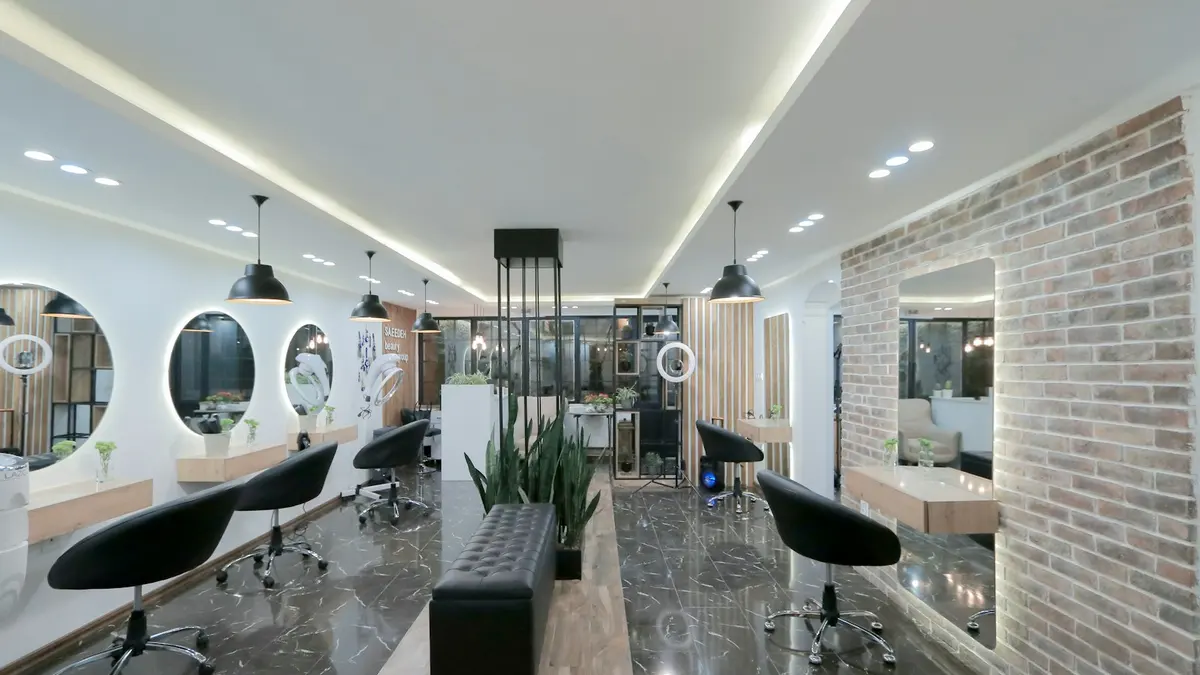
How to open a beauty salon: cost checklist
Rent, fit-out, equipment, consumables, staff pay and pricing: what to work out before you open a beauty salon, and in what order, with a sample budget.
Most people who open a salon budget for the fit-out and the equipment, then struggle through the first few months. The reason is simple: a salon isn’t full on opening day. While you build a client base, rent, utilities and wages keep running and revenue is still thin.
This guide breaks the preparation into steps and ends with a sample budget. The numbers are assumptions, shown in manat purely for illustration — swap in your own currency and local quotes.
1. Concept first, premises second
Before you look at a single property, answer three questions in writing:
- Which services? Hair, nails, skin, brows and lashes — each needs different equipment and different space.
- How many stations? A salon with 2 chairs and 1 nail desk is a completely different budget from one with 6 chairs.
- For whom? Your average spend per visit and your target client decide the location, the level of fit-out and your prices.
Without those answers, choosing premises means surprises during the fit-out.
2. Premises and rent: check before you sign
- Water and drainage — backwash units and pedicure chairs can’t go just anywhere.
- Electrical capacity — dryers, steriliser, laser and air conditioning running at once must not trip the supply.
- Ventilation — essential for colour and nail dust, and expensive to add later.
- Visibility and access — ground floor, shopfront, parking.
- Lease terms — deposit, months payable upfront and whether the landlord offers reduced rent during the fit-out.
Fit-outs almost always overrun. Every extra week is rent the salon pays before it earns anything.
3. Fit-out and equipment
The items most often missing from a fit-out budget: plumbing, electrics, lighting (the right colour temperature for colour work), mirrors and storage.
List equipment by station:
- Hair station: chair, mirror, trolley, dryer, straighteners, scissors; a shared backwash.
- Nail station: desk, lamp, e-file, dust extractor, steriliser.
- Shared: reception desk, waiting area, till hardware, washing machine, first-aid kit.
Test demand before buying expensive devices (laser, skin machines) — an idle machine is the most expensive furniture in the room.
4. Consumables
Buy one or two months of stock to start with, no more. You’ll only learn your real usage in the first months. How to track materials per service: salon inventory tracking.
5. Permits and paperwork
Requirements depend on the country, the city and the type of service, so we don’t give a ready-made list. Before opening, ask your local authority and your accountant:
- Which business structure makes sense, and how will tax be handled?
- What permits or licences does a salon need at this address?
- What are the rules on hygiene, sterilisation and fire safety?
- Do laser, injectables or other medical-type treatments need a separate licence or qualification?
- How should you employ or contract your staff?
Ask these before you sign the lease — some requirements relate to the premises themselves.
6. Staff pay model
There are three main approaches:
- Commission — the stylist earns a share of each service. Lower risk for a new salon: no clients, no payout.
- Base + commission — helps you attract a strong stylist because it gives them security in the early months.
- Chair rental — the stylist brings their own clients and pays the salon a fixed fee.
Put the model, and who pays for materials, in writing. More detail: how to calculate staff commission.
7. Prices and break-even
Work out prices from your own costs, not from the salon next door:
Monthly fixed costs ÷ what the salon keeps per visit = visits needed to break even.
How to build the price list itself: salon price list template.
Sample budget (every figure is an assumption)
Say it’s a small salon: 2 hair chairs and 1 nail desk.
| One-off cost | Example |
|---|---|
| Rent deposit + first month | 3,000 ₼ |
| Fit-out | 12,000 ₼ |
| Equipment and furniture | 9,000 ₼ |
| Opening stock | 2,500 ₼ |
| Signage, shopfront, launch marketing | 1,500 ₼ |
| Registration and permits | depends on local rules |
| Total (excluding permits) | 28,000 ₼ |
| Monthly fixed cost | Example |
|---|---|
| Rent | 1,500 ₼ |
| Utilities and internet | 300 ₼ |
| Receptionist | 600 ₼ |
| Marketing | 350 ₼ |
| Software | 49 ₼ |
| Total | ~2,800 ₼ |
With an average spend of 40 ₼, materials at 15% and commission at 40%, the salon keeps 18 ₼ per visit. 2,800 ÷ 18 ≈ 156 visits a month — about 6 a day over 26 working days — just to cover fixed costs.
That’s why the budget needs a reserve of at least 3 months’ fixed costs on top. In this example, roughly 8,400 ₼.
8. Launch marketing: start before you open
- Open the Instagram account during the fit-out: show the team, the progress and the opening date.
- Set up your Google Maps business profile in advance — address, hours, photos.
- Take advance bookings for opening week so the first days are full.
- Ask your stylists to tell their existing clients about the new address.
- Give clients a reason for a second visit after the first, such as a small extra on their next service.
How Rezneed handles it
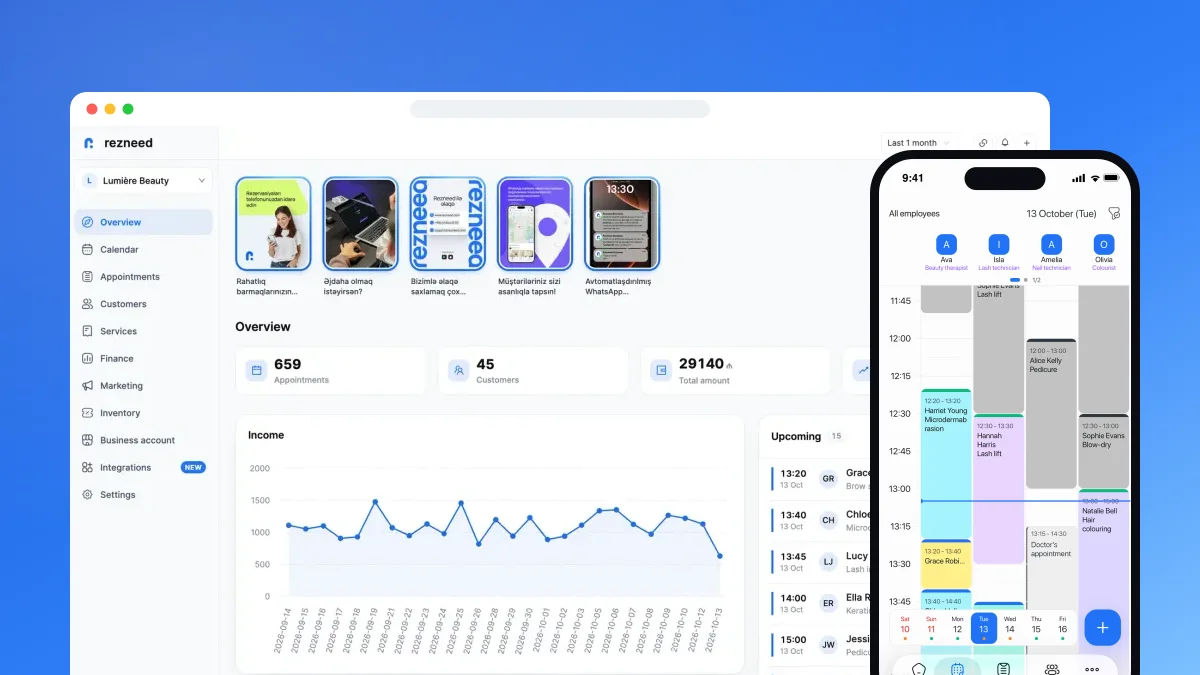
Set Rezneed up a week or two before opening. Add your services, team and opening hours, and your online booking link is ready straight away — you can fill opening week from Instagram while the builders are still in.
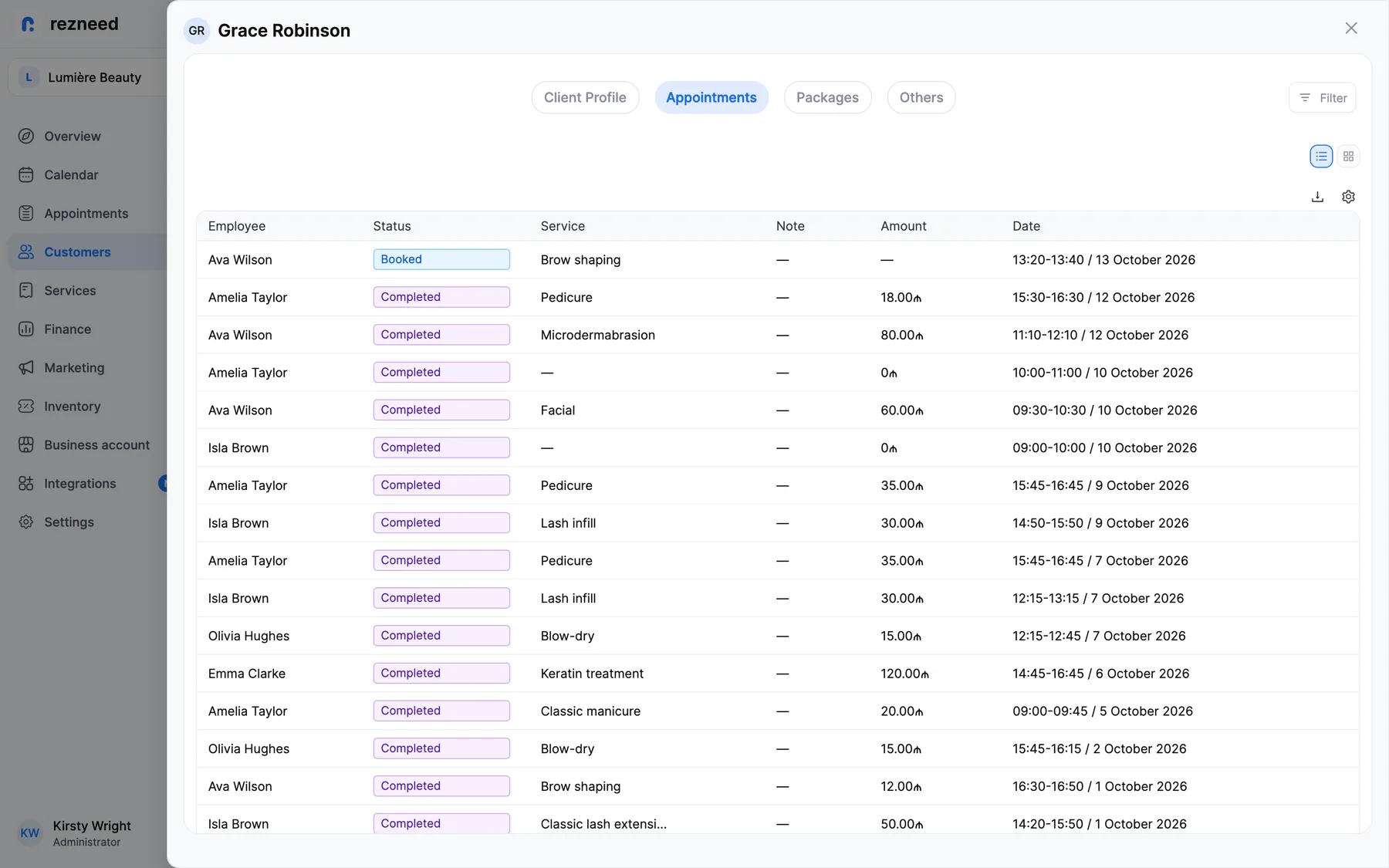
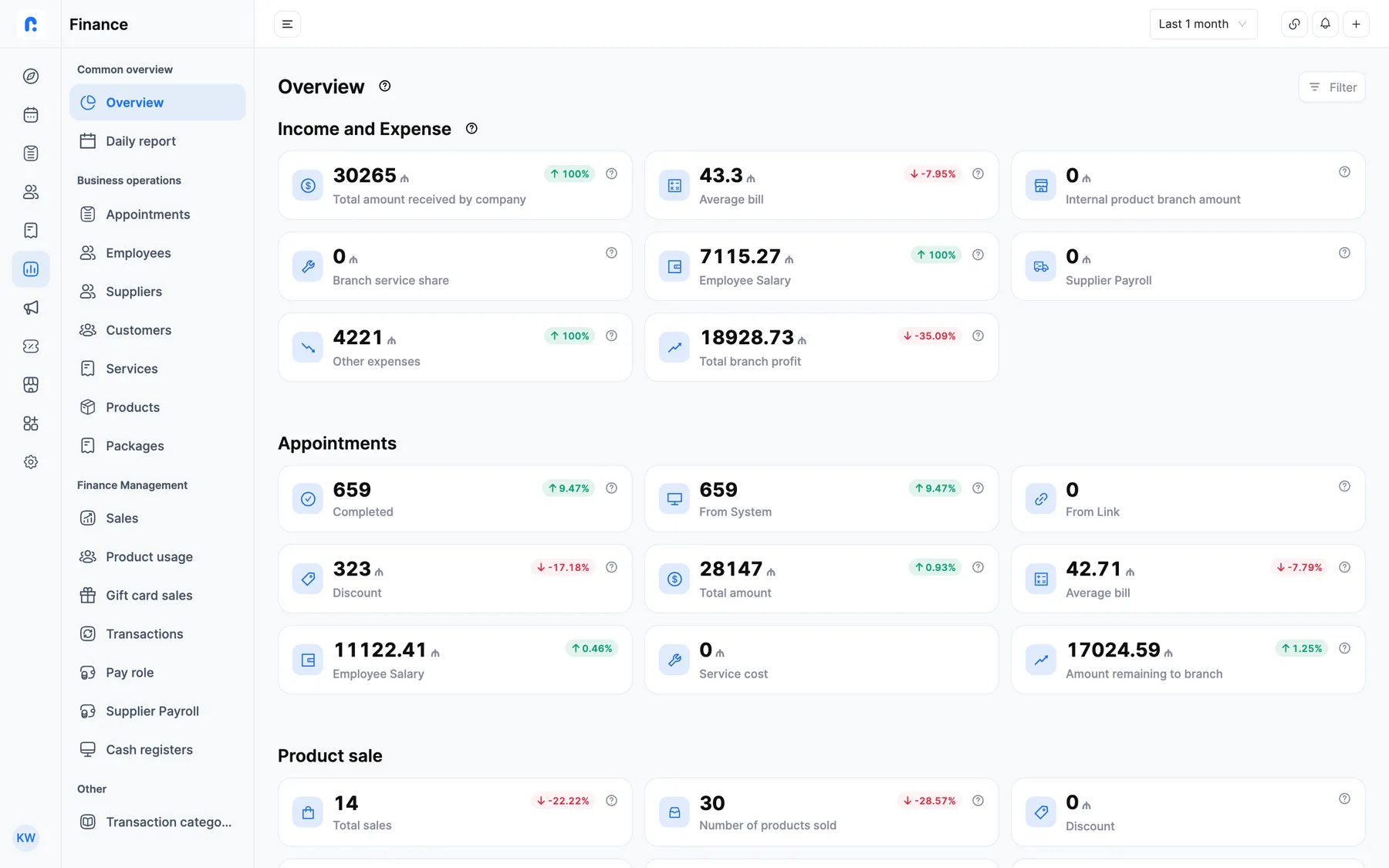
From day one the till separates cash and card, and staff commission is calculated automatically as a percentage or a fixed amount per service. In inventory, recipe cards deduct the materials each service uses, and the finance report shows real profit and loss at the end of the month. A ready-made setup for salons: Rezneed for beauty salons.
The 45-day free trial doesn’t roll into a paid plan automatically. After that, Basic is 49 ₼ a month (3 staff, 1 location), plus 15 ₼ a month for a WhatsApp number; every plan is on the pricing page.
Get your salon set up before opening day: start your 45-day free trial. No card required.