Pilates studio software: what really matters
Class packs with expiry dates, recording visits, health notes and instructor commission: what to check when choosing software for a Pilates or yoga studio.
Clients don’t come to a Pilates or yoga studio just once. They buy a pack of 8, 12 or 20 classes, come two or three times a week and stay for months. So the studio’s real job isn’t a single booking but managing that long relationship: how many classes are left, when the pack expires, what injury the client has, which instructor they work with.
Below are practical ways to get a studio organised and the questions to ask when choosing Pilates studio software.
1. The pack is your main product
A pack brings money in up front and gives the client a routine. But only if it’s set up properly:
- Give it an expiry date. “12 classes within 6 weeks” encourages people to come regularly. A pack with no end date can sit untouched for months.
- Count down the balance automatically. Reception shouldn’t be checking a notebook every time.
- Let clients see their balance. “How many have I got left?” eats into reception time every day.
- Allow instalments. A 20-class pack is often too much to pay in one go.
It’s also worth messaging clients as their pack runs out. Someone who finished their pack and hasn’t been in for two weeks is much harder to win back.
2. Private, duet and group classes
Studios usually run three formats: private (one client on a reformer), duet and small group (mat or reformer). Each should be its own service with its own length and price.
The key question for group classes is capacity. If you have 6 reformers, you can’t book a seventh person into that hour. Ask this directly when choosing software: is there a capacity limit for groups, or does reception keep track of places?
3. Recording who came and who didn’t
When a class starts, the instructor has no time for a paper register, yet every visit affects a pack balance, so it has to be recorded correctly. Ask how the software does it: is each client’s visit recorded on its own, and what happens to the pack when someone doesn’t turn up?
4. Client history and health notes
People often come to Pilates with back pain, to recover from an injury or during pregnancy. Before a class the instructor needs to know:
- injuries and limitations (“left knee — no deep squats”);
- a doctor’s recommendation or note (as a file);
- the client’s goal and progress;
- past classes and which instructor took them.
That information shouldn’t disappear when the instructor changes. Clients shouldn’t have to tell their story again to every new instructor.
5. Instructor commission
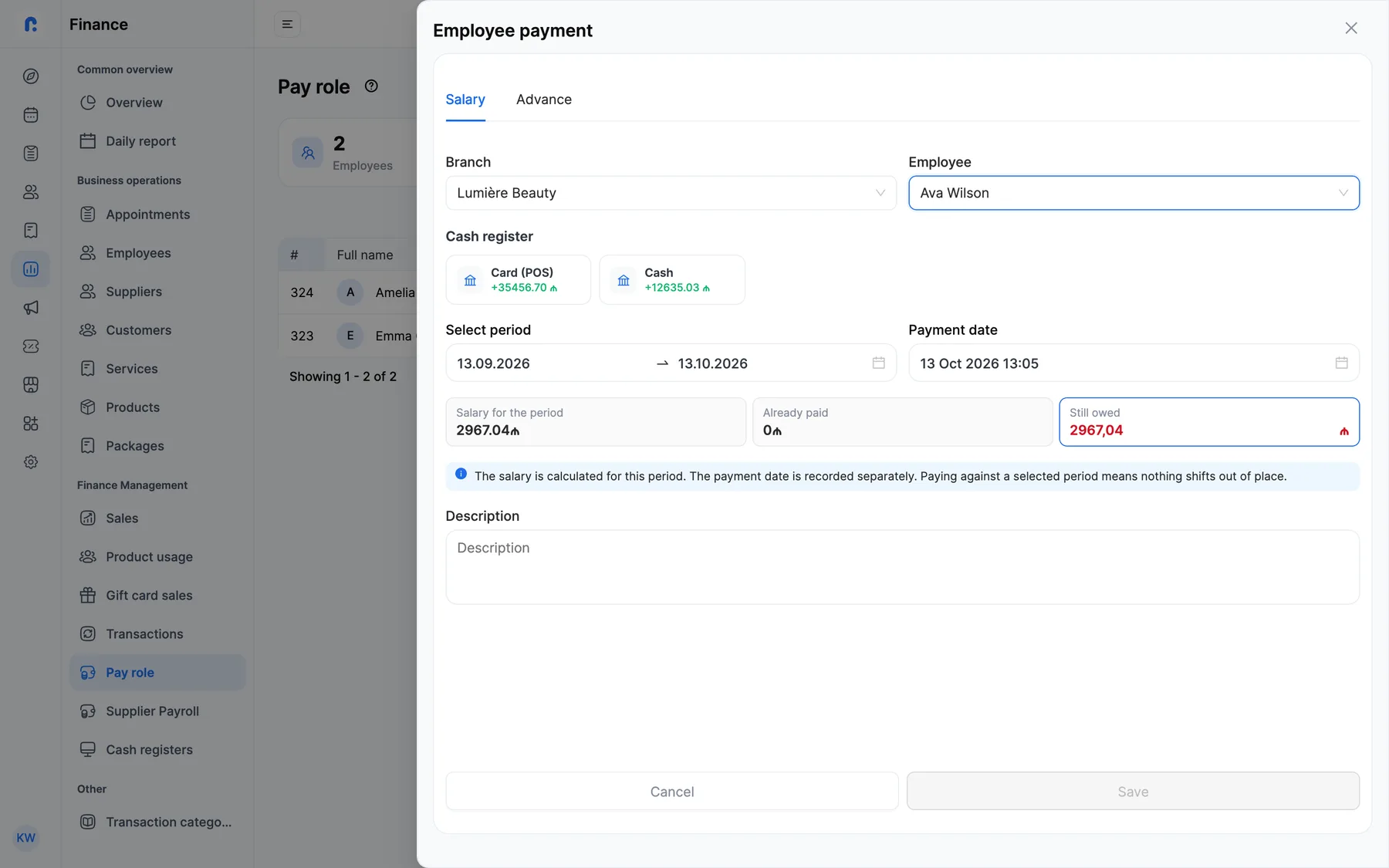
Instructors are often paid a fixed amount or a percentage per class, sometimes with a share of pack sales too. When that’s worked out by hand at month-end, arguments follow. The software should work out each instructor’s share from every class. More on this: how to calculate staff commission.
6. Reminders
A client who doesn’t turn up is an empty place in a group or an empty hour in a private session. A reminder a few hours before class and a clear cancellation rule cut that loss. More on this: how to reduce no-shows.
What to check in a demo
- Can a pack have a class count, an expiry date and instalment payments?
- Does the balance count down automatically, and can the client see it?
- Is there a capacity limit for group classes? If not, how are places tracked?
- How is a visit recorded, and what happens to the pack when a client doesn’t come?
- Can you add notes and files (a doctor’s note, say) to the client card?
- Is instructor commission calculated separately for classes and pack sales?
- Do reminders go out on WhatsApp from the studio’s own number?
Rezneed for Pilates and yoga studios
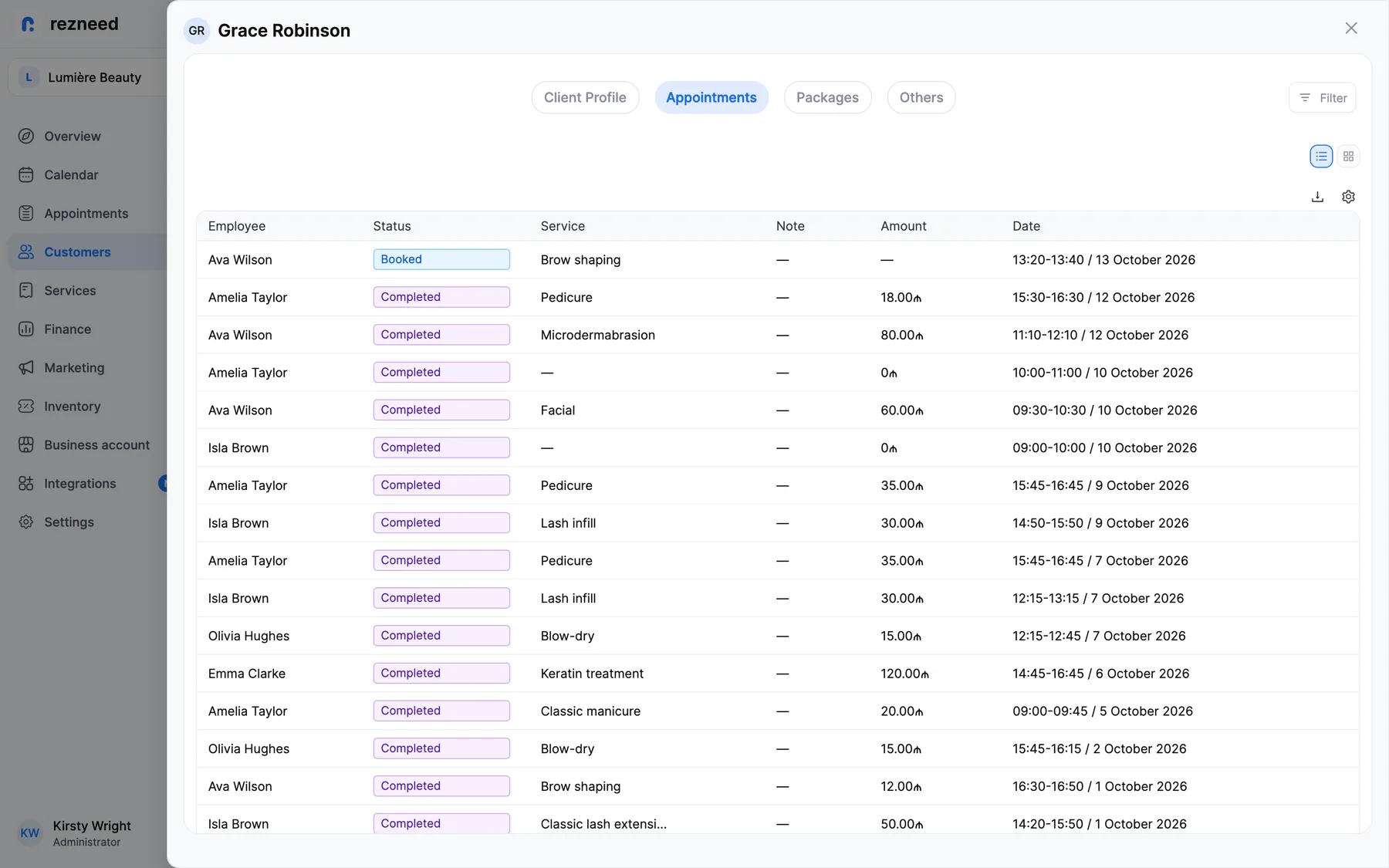
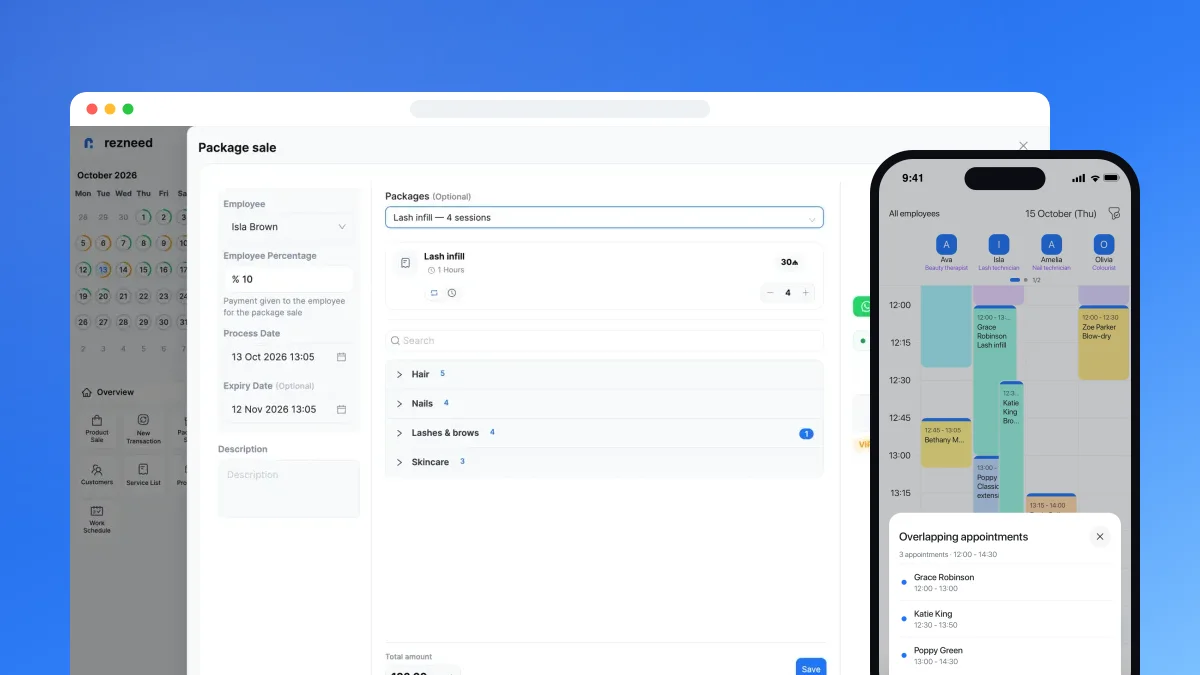
In Rezneed, 8, 12 or 20-class packages are sold with an expiry date and can be paid in instalments, with paid and outstanding amounts on the client card. The balance counts down automatically at every visit. Clients see their pack, remaining classes and expiry date in the client portal and can check in to a class themselves. When it’s time to renew, you message them on WhatsApp straight from their card.
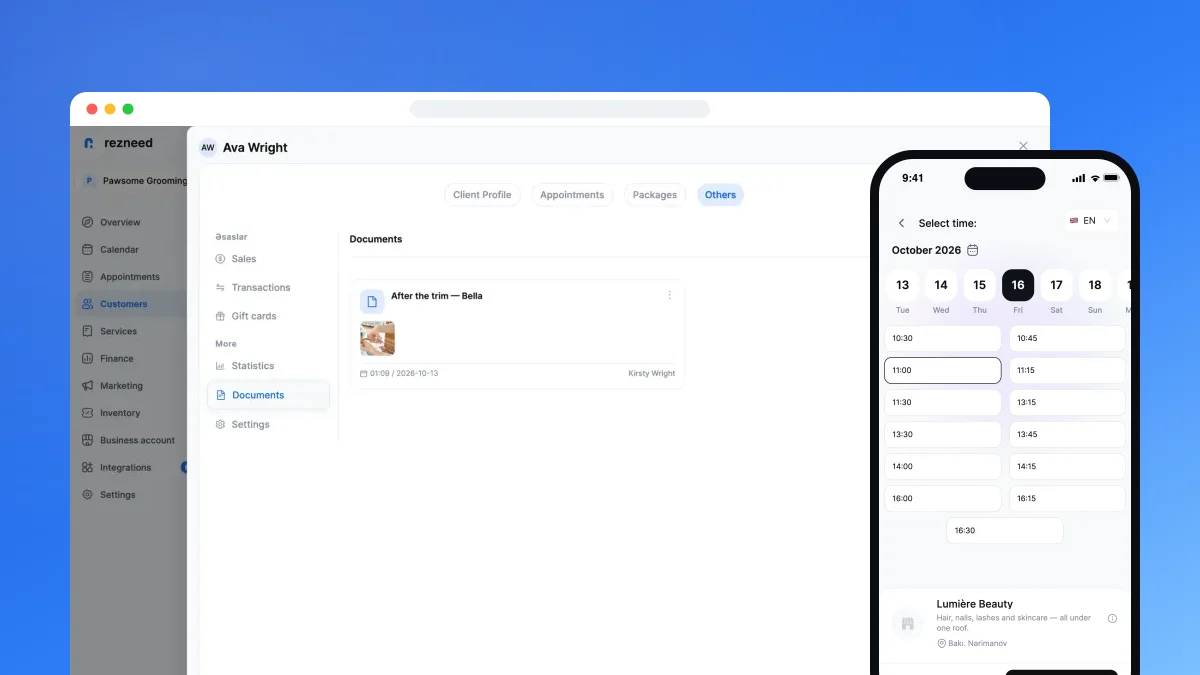
Each client has their own appointment in the class hour: complete it and the visit comes off their pack, or, if they don’t come, cancel it with the reason “Customer did not come”. There’s no one-tap register for the whole group: each visit is completed or cancelled on its own. The client card holds history, notes, tags and files, which suits an injury note or a doctor’s letter. Instructors earn a percentage or fixed amount on services, pack sales and products, and at the end of the pay period it’s calculated with advances deducted. Automatic confirmations and reminders go out free of charge from the studio’s own WhatsApp number.
To be clear about what isn’t there:
- No capacity limit for group classes. Each client is booked into the same hour individually, and reception keeps count of places.
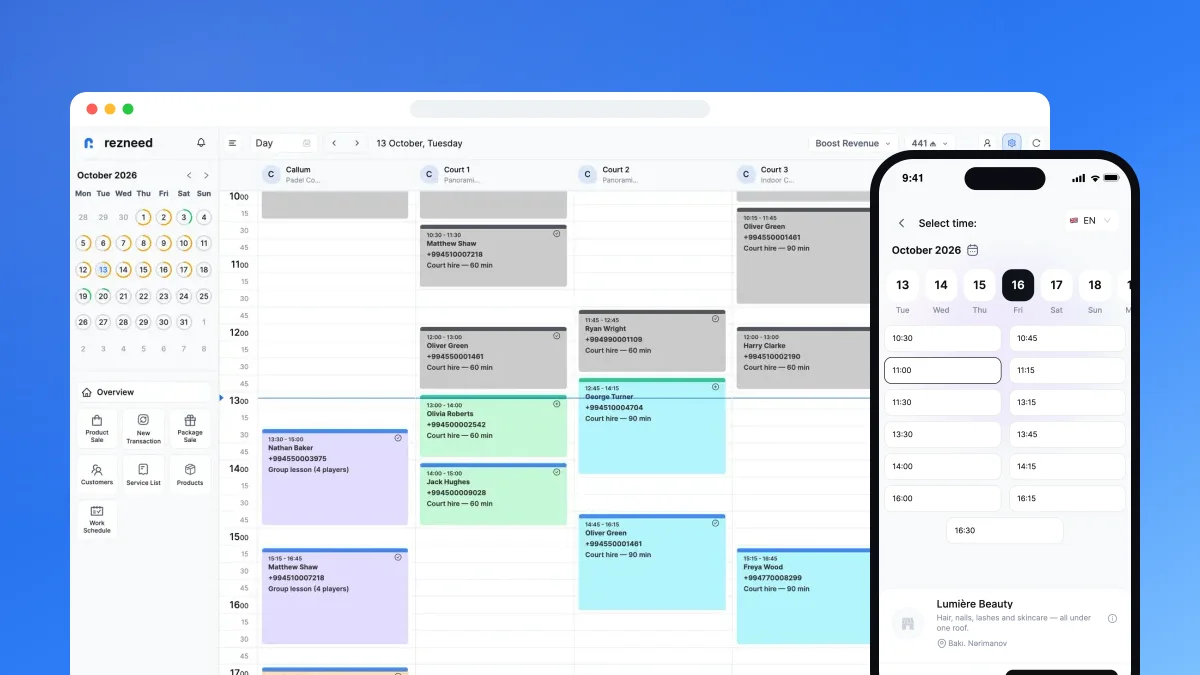
- Reformers and rooms aren’t booked as separate resources — the calendar is organised by instructor.
- No unlimited monthly memberships — sell time-limited packs instead.
- No recurring appointments — weekly classes are booked one by one.
Everything Rezneed offers for studios: Rezneed for Pilates studios.
Try your packs with real clients: start Rezneed free for 45 days, no card required.