Spa and massage booking software: a guide
Gift cards, massage courses, booking for overseas guests, therapist commission and oil use: what to check when choosing spa and massage booking software.
A spa or massage studio earns from several sources at once: one-off massages, courses of sessions, gift cards sold for festive seasons and guests visiting from out of town. Each needs its own tracking, and when they’re kept in separate notebooks you can’t see the real picture: which voucher has been used, how many sessions are left on whose course, how much each therapist has earned.
This guide covers the practical side of running a spa or massage studio and what to check when choosing booking software for it.
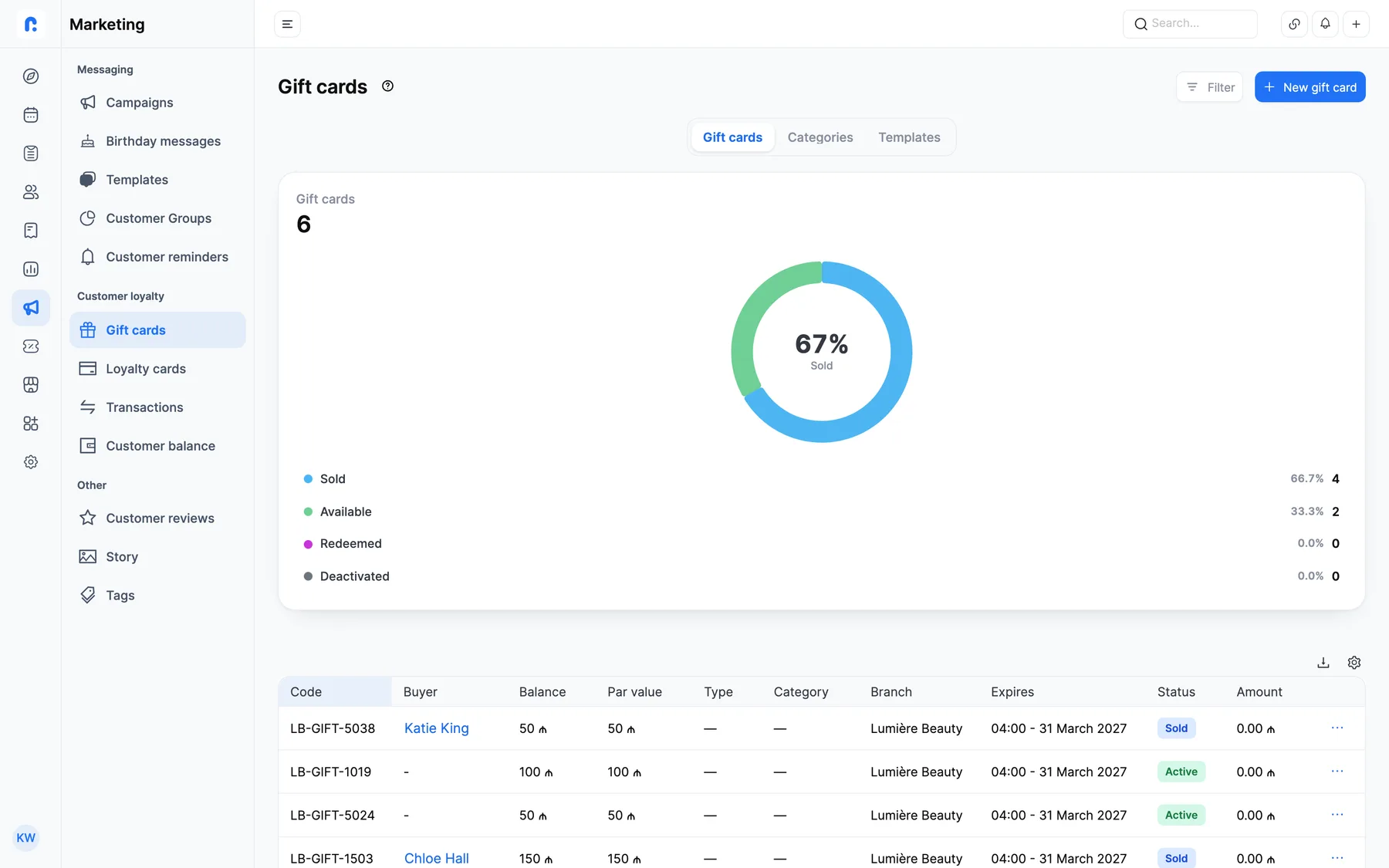
1. Gift cards — your festive-season income
Christmas, Valentine’s Day, Mother’s Day, birthdays — for a spa these are gift card seasons. The trouble with paper vouchers is well known: nobody knows which were sold, which were used or who has spent half, and sometimes the same voucher turns up twice.
What you need from gift cards in software:
- cards for an amount or a percentage;
- batch creation — dozens of cards at once before the festive rush;
- partial spending — a 120 ₼ massage on a 200 ₼ card, with the rest kept for next time;
- an expiry date that’s tracked;
- a separate balance for every card.
2. Massage courses — by session or by minute
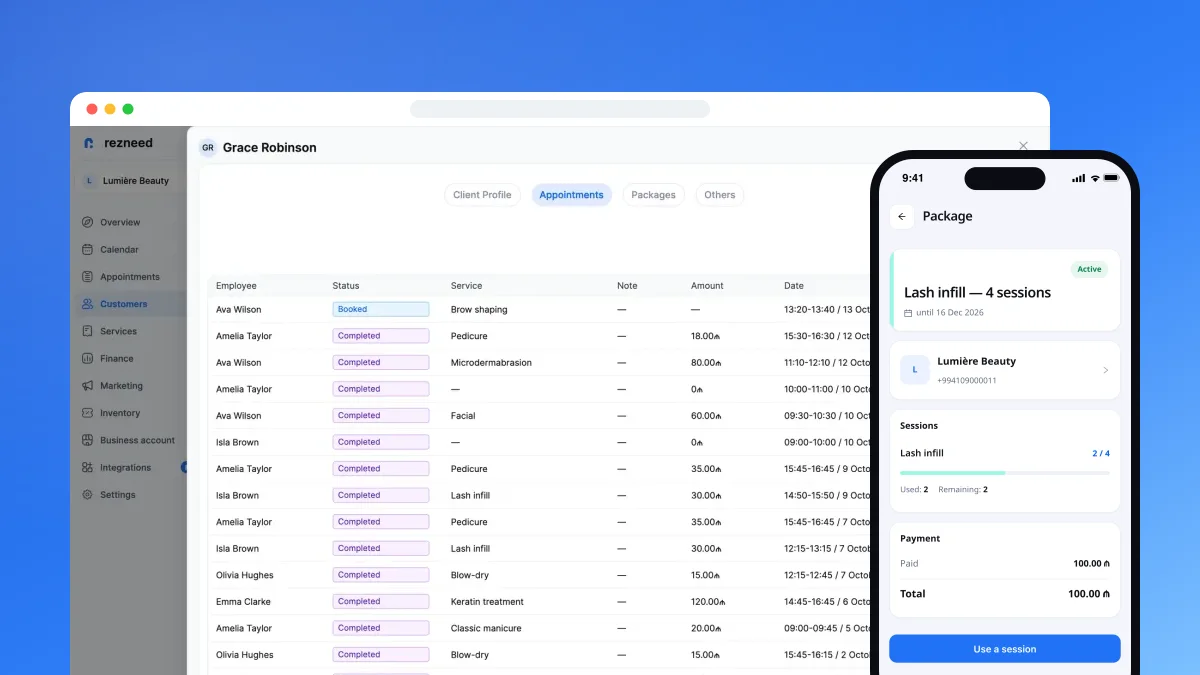
Massage is often recommended as a course: 10 back massages or 5 lymphatic drainage sessions. A package is the natural fit. A more flexible option is a minute package: the client buys 300 minutes and uses them in 60- or 90-minute sessions. The balance should go down after every session, and the client should be able to see it.
3. Overseas guests and language
Tourists and business travellers are important clients for a spa. They usually book in the evening, from their hotel, on a phone. If the booking page and the confirmation are in one language only, the guest either has to call or goes somewhere else. A booking page in several languages and messages in the guest’s own language remove that barrier.
4. Couples massages and rooms
A couples massage means two therapists working at the same time. When you plan one, you need both therapists and a room to be free.
If you have fewer rooms than therapists, that’s a planning question of its own. Ask when choosing software: can rooms be booked as a separate resource? If not, build therapists’ shifts around the number of rooms.
Build room turnaround into the service length too: setting aside 75 minutes for a 60-minute massage stops delays piling up by the end of the day.
5. Oil and product use
Massage oils, scrubs and masks are part of what a treatment costs you. If you don’t track their use, you can’t see which treatments are really profitable. A good approach: set the amount of product each treatment uses in advance, and take it off stock when the session closes. More on that: how to track inventory.
6. Therapist commission and ratings
Therapists usually work on commission from massages, packages and products sold. It should be calculated automatically from every session. More on this: how to calculate staff commission.
Ratings matter a great deal for a spa: new guests often choose based on other people’s experience. Asking for a 1–5 star rating after each session builds them up steadily.
What to check in a demo
- Can gift cards be created in batches, spent in parts and tracked to expiry?
- Can packages be sold by session or by minute?
- How many languages do the booking page and messages come in?
- How is a couples massage booked? Can rooms be booked separately?
- Is product use tied to the treatment and taken off stock automatically?
- Is therapist commission calculated separately for massages, packages and products?
- Can guests rate their visit after the session?
Rezneed for spas and massage studios
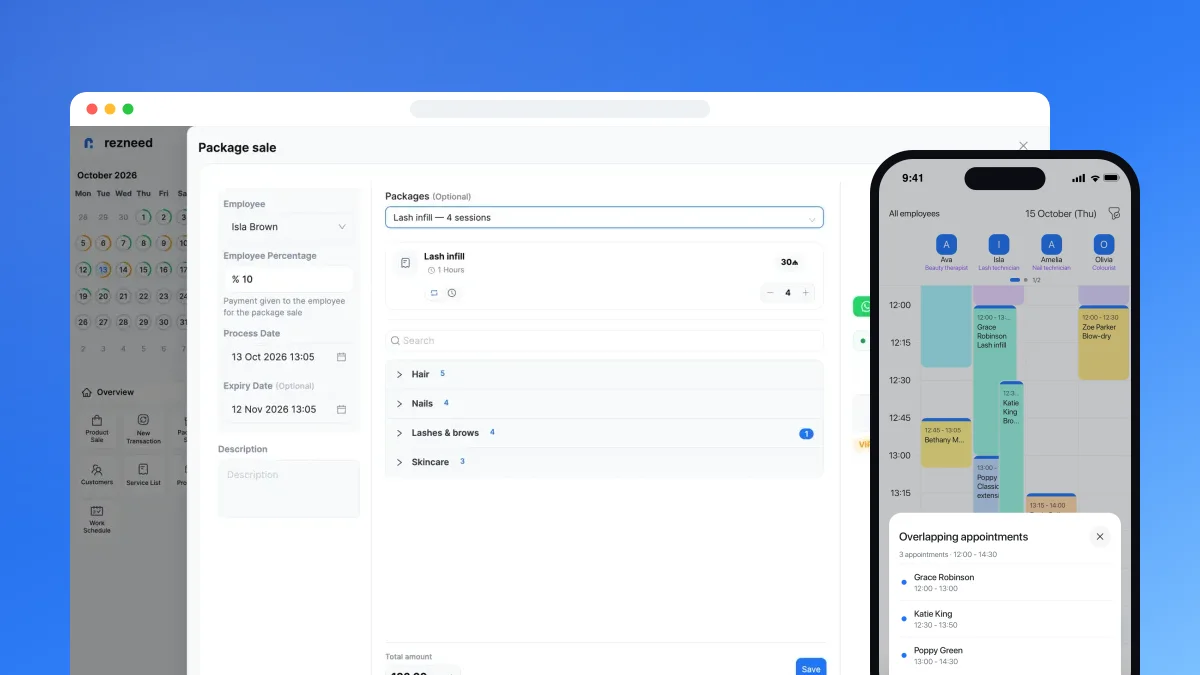
In Rezneed, gift cards for an amount or a percentage are created in batches, sold at the till and spent in parts, with expiry tracked. Clients see their card in the client portal. Massage courses are sold as session or minute packages: on a 300-minute package, for example, the balance goes down by itself after every session.
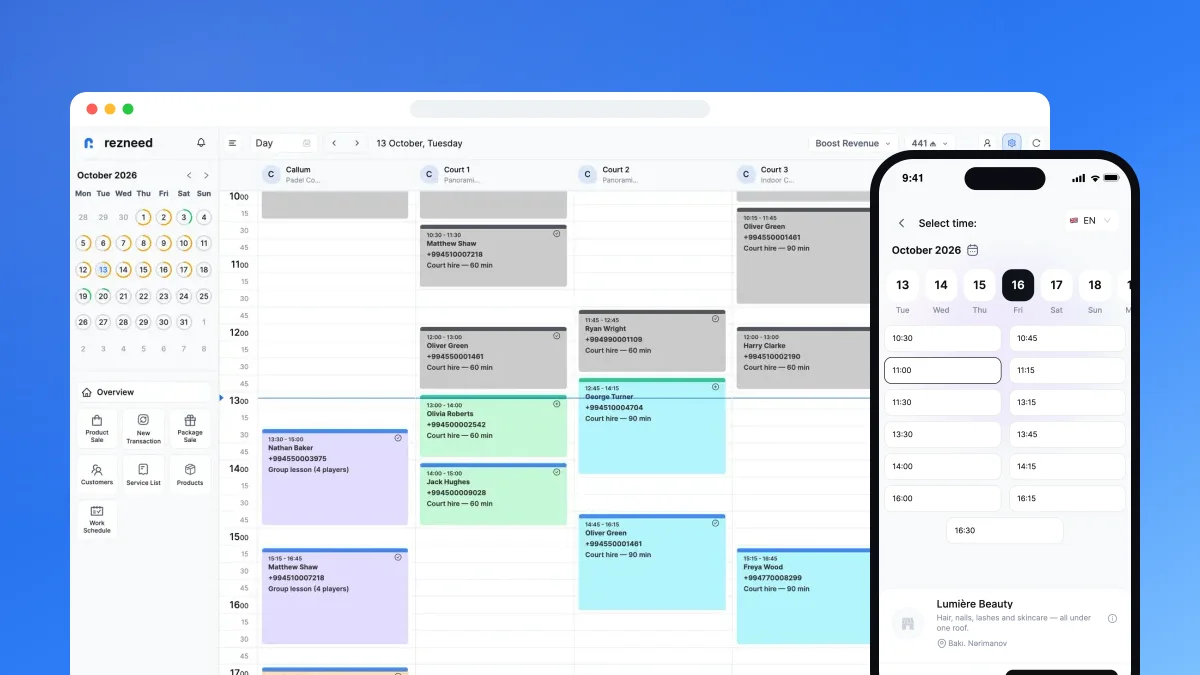
The booking page opens in 6 languages — Azerbaijani, English, Russian, Turkish, Arabic and Georgian — and confirmations and reminders go out free of charge from the spa’s own WhatsApp number in the guest’s language. For a couples massage you book a separate appointment for the same time in each of the two therapists’ calendars; each counts towards its own therapist’s commission, and payment is taken at one till.
A recipe card sets how much oil each massage uses, and it comes off stock automatically when the visit closes, with a WhatsApp alert when stock runs low. Therapists earn a percentage or fixed amount on massages, packages and products. After the visit the guest is asked on WhatsApp to rate it from 1 to 5 stars, and you can show ratings on the booking page if you like.
One limit to know: Rezneed doesn’t book rooms as a separate resource — the calendar is organised by therapist, so you account for the number of rooms yourself when planning shifts. There are no deposits or prepayment; online card payment by clients via Epoint is coming soon.
Everything Rezneed offers for spas: Rezneed for spas and massage studios.
Try gift cards and packages with your own guests: start Rezneed free for 45 days, no card required.