Vet clinic software: what to look for
Appointments, pet notes and test results on the owner's card, messages when vaccines are due, medicine stock: a checklist for choosing vet clinic software.
Every appointment at a vet clinic has two “clients”: the patient and its owner. You treat the animal, but it’s the owner who calls, pays and forgets the next vaccination. So a clinic’s system has to hold information about the patient and the relationship with the owner in one place.
Below is the practical side of running a vet clinic and the questions to ask when choosing vet clinic software.
1. Appointments and the shape of the day
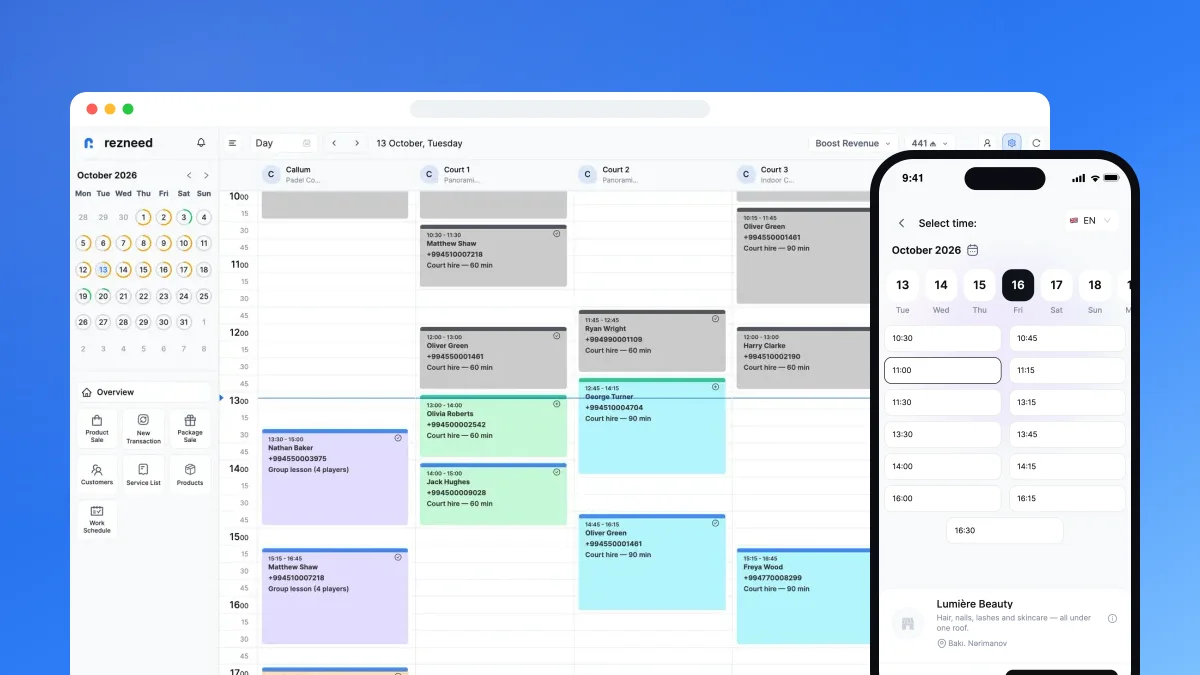
A clinic’s day is a mix of planned appointments and the unexpected. Getting the planned part in order makes room for the rest:
- Split services by length. A vaccination is 15 minutes, a general check-up 30, a minor procedure an hour. Make each its own service so the calendar works out free time correctly.
- Keep time free for emergencies. Blocking an hour or two a day gives you room for an urgent case without wrecking the schedule.
- Let owners book online. Nobody should have to phone for a vaccination or a routine check-up — that keeps the reception line free for emergencies.
2. Everything about the patient in one place
Before seeing the patient, the vet needs to know:
- name, species, breed, age and weight;
- allergies and chronic conditions;
- previous visits and treatment;
- vaccination history;
- lab results and X-rays.
If this sits in a vet’s inbox or phone, the next vet can’t find it. It all belongs on the owner’s card, visible to every vet in the clinic.
Owners often have more than one pet. When choosing software, always ask how it tells them apart.
3. Let owners send documents in advance
If a patient’s results from another clinic or a photo of its vaccination record arrive before the visit, the appointment goes faster. Being able to attach a file on the booking form makes this easy.
4. Vaccination and follow-up reminders
The vaccination schedule is a vet clinic’s steadiest source of income, but only if owners are reminded. Nobody remembers a booster due in a year’s time on their own.
An approach that works:
- Note the next date at the end of the appointment — or better, book the next appointment there and then.
- Send an automatic reminder before the appointment.
- Message owners whose vaccinations are due. Grouping owners with tags (for example, “rabies — March”) lets you reach them all with one message.
Ready-made wording: WhatsApp appointment reminders: 10 templates.
5. Medicine, food and accessory stock
A clinic is also a shop: medicines, pet food, accessories. If medicine used in a procedure isn’t taken off stock, the count won’t match at month-end. Sales should go through by barcode, materials used in procedures should come off automatically and you should get a warning when something is running low. More on that: how to track inventory.
6. Permissions and vet commission
Reception books appointments and takes payments but shouldn’t see the clinic’s finances. Vets may not need to see owners’ phone numbers at all. If vets are paid on commission, it should be calculated automatically from services and product sales. More on this: how to calculate staff commission.
What to check in a demo
- Can you set up services of different lengths and block time for emergencies?
- How are several pets belonging to one owner told apart?
- Are lab results and X-ray files kept on the record, and can every vet see them?
- Can owners attach files themselves when booking?
- How are vaccination reminders sent — automatically or by hand?
- Is medicine use tied to the procedure and taken off stock automatically?
- Are there roles and permissions — can phone numbers and finances be hidden?
Rezneed for vet clinics
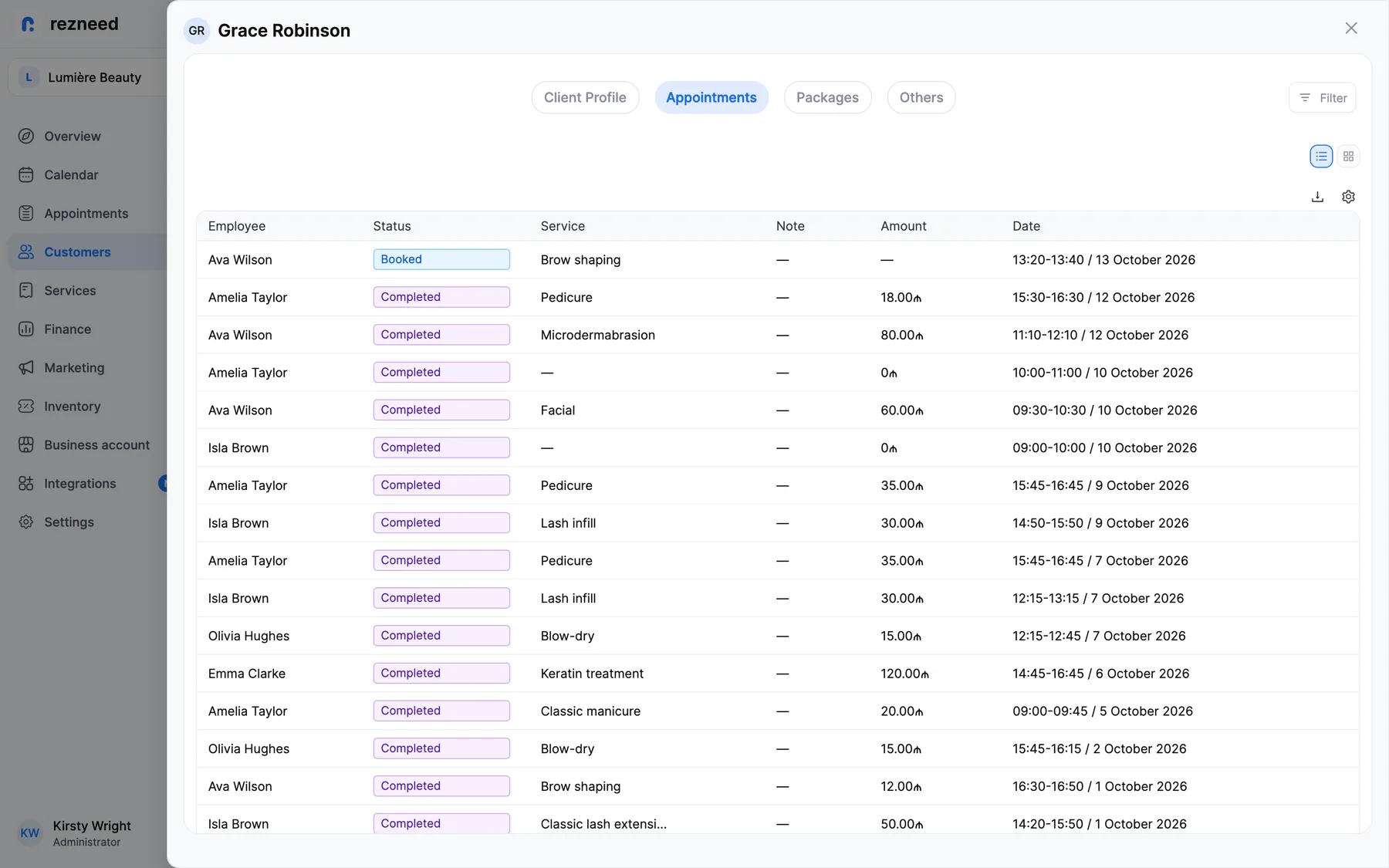
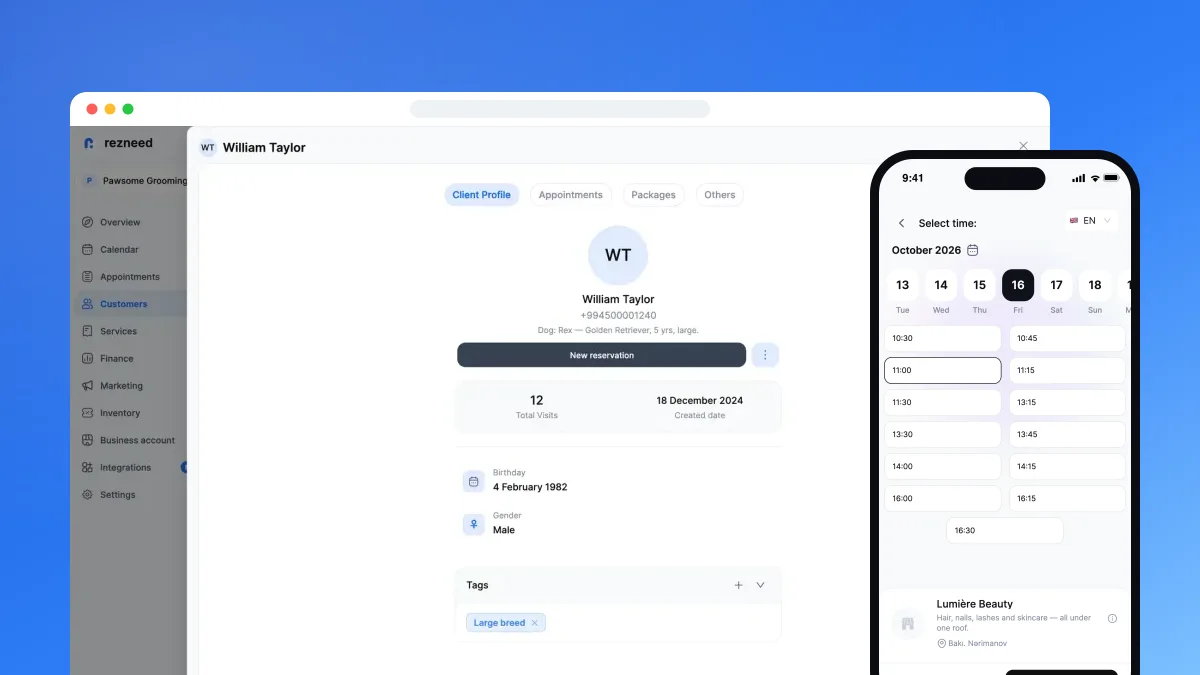
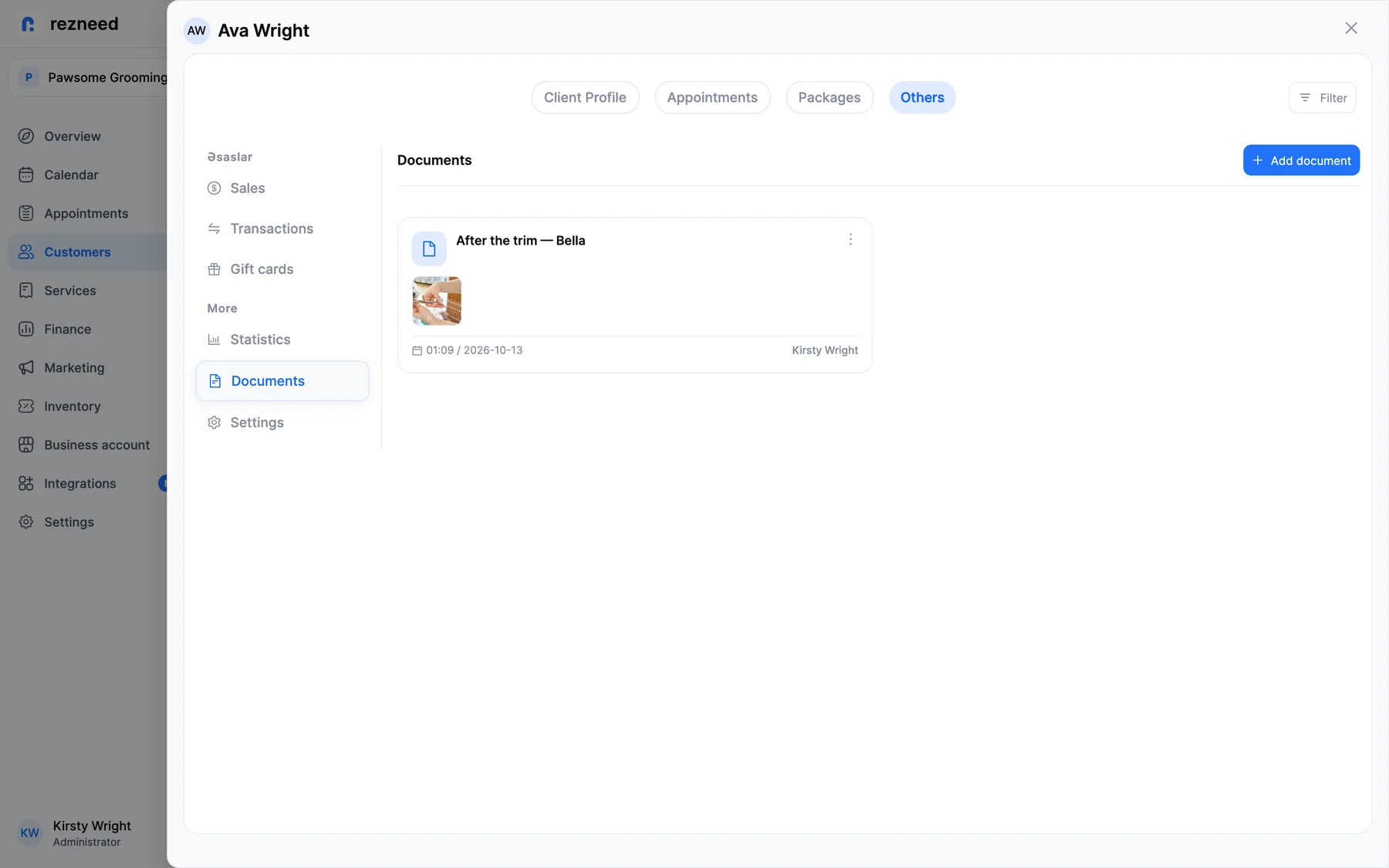
In Rezneed each owner has one client card. The pet’s name, species and quirks are kept on it in notes and tags, and every visit shows in the history. There’s no separate pet profile: when an owner has several pets you tell them apart with notes and tags, and each booking’s note says which pet it’s for. Lab results and X-rays are kept on the card as files, and owners can attach up to 10 files themselves when they book online.
Automatic confirmations and reminders go out free of charge from the clinic’s own WhatsApp number. Vaccination reminders aren’t scheduled automatically, though: when one is due you send the owner a one-off WhatsApp reminder from their card, or set up a campaign by tag for a group of owners. These use your message balance.
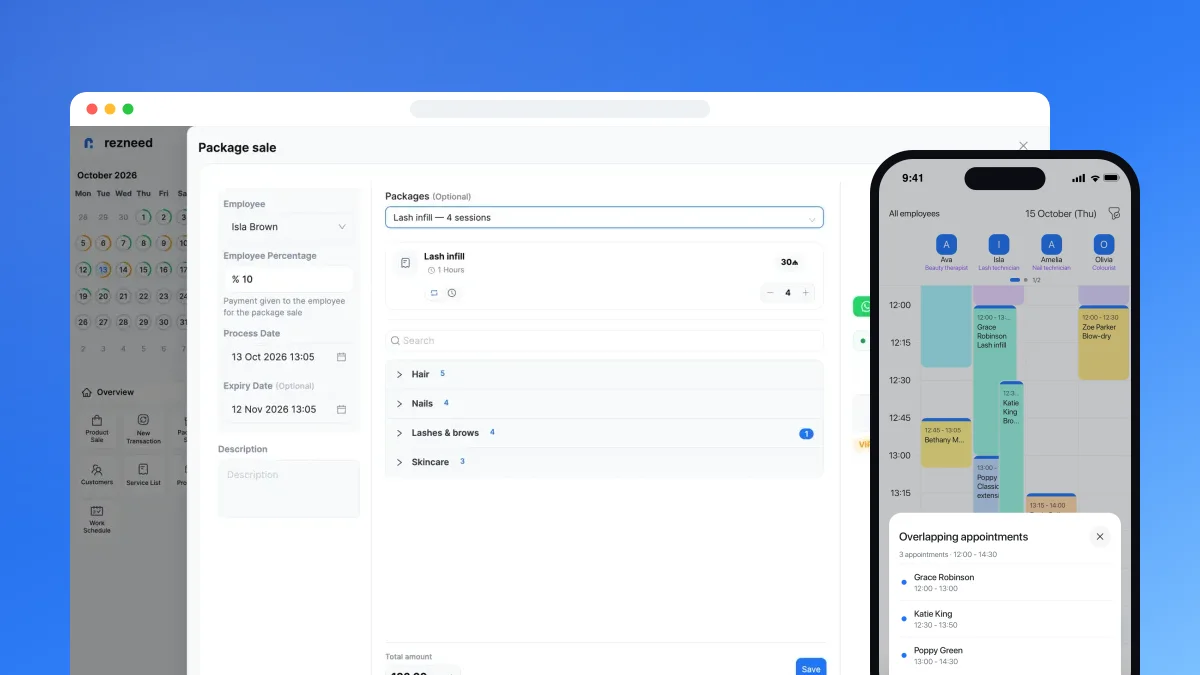
Medicines and food sell by barcode, medicine used in a procedure comes off stock through its recipe card, and low stock triggers a WhatsApp alert. The team section has 4 roles and 13 per-person permissions — hiding phone numbers or finances, for example. Each vet earns a percentage or fixed amount on services and product sales, and the report exports to Excel.
To be straightforward: Rezneed isn’t a specialist veterinary medical records system. There are no consent forms and no prescription section; documents are uploaded as ordinary files.
Everything Rezneed offers for vets: Rezneed for vet clinics.
Try it in your own clinic: start Rezneed free for 45 days, no card required.